
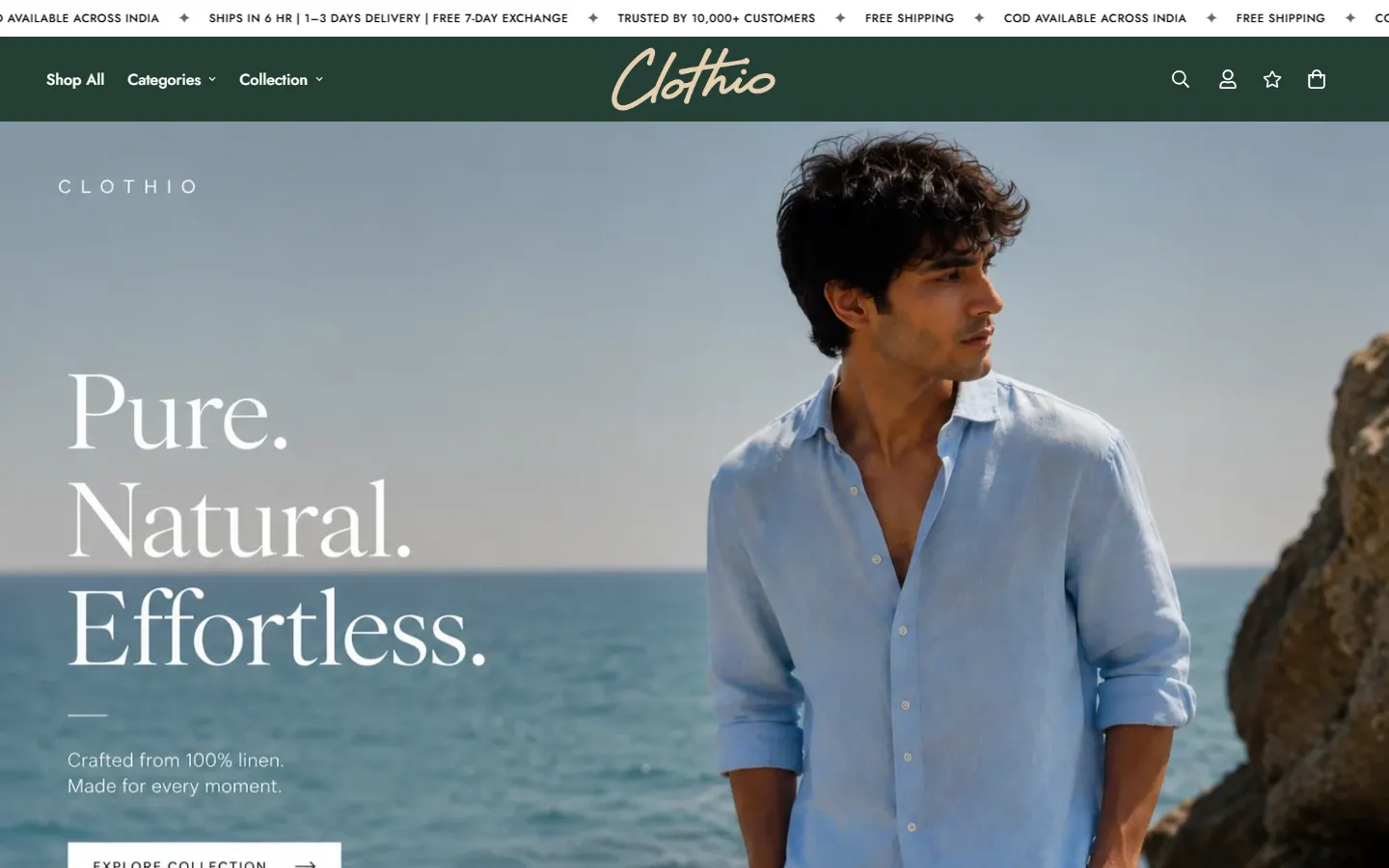
Clothio — visit clothio.in (opens in a new tab)
E-commerceFashion store · Shopify
Shopify storefront for a fashion and apparel brand.
From a first Shopify store to a custom storefront, we design e-commerce websites that help customers find the right product, understand it, and buy with confidence.
Messy collections and weak filters make shoppers give up before they find the right item.
Missing sizing, ingredients or usage details create hesitation at the moment of purchase.
Small buttons, slow images and awkward carts cost sales on phones.
A default theme rarely communicates what makes a brand different.
Recommended approach: Shopify is often the fastest route to a reliable store. For unusual catalogues or workflows, a custom storefront may fit better.
Shopify Store DevelopmentPlanning guide: Shopify Store Cost in 2026: What You’ll Really Pay to Launch and Run a Store
Read the guidePlanning guide: Shopify vs WooCommerce in 2026: How to Choose the Right Platform for Your Store
Read the guideThe shopping journey we design and refine for each store.
Lands on the homepage or a product from social media or search.
Uses navigation and filters to narrow down options.
Checks images, variants, details and delivery information.
Reviews the cart and completes payment securely.
Websites from our portfolio in this sector.
E-commerceFashion store · Shopify
Shopify storefront for a fashion and apparel brand.
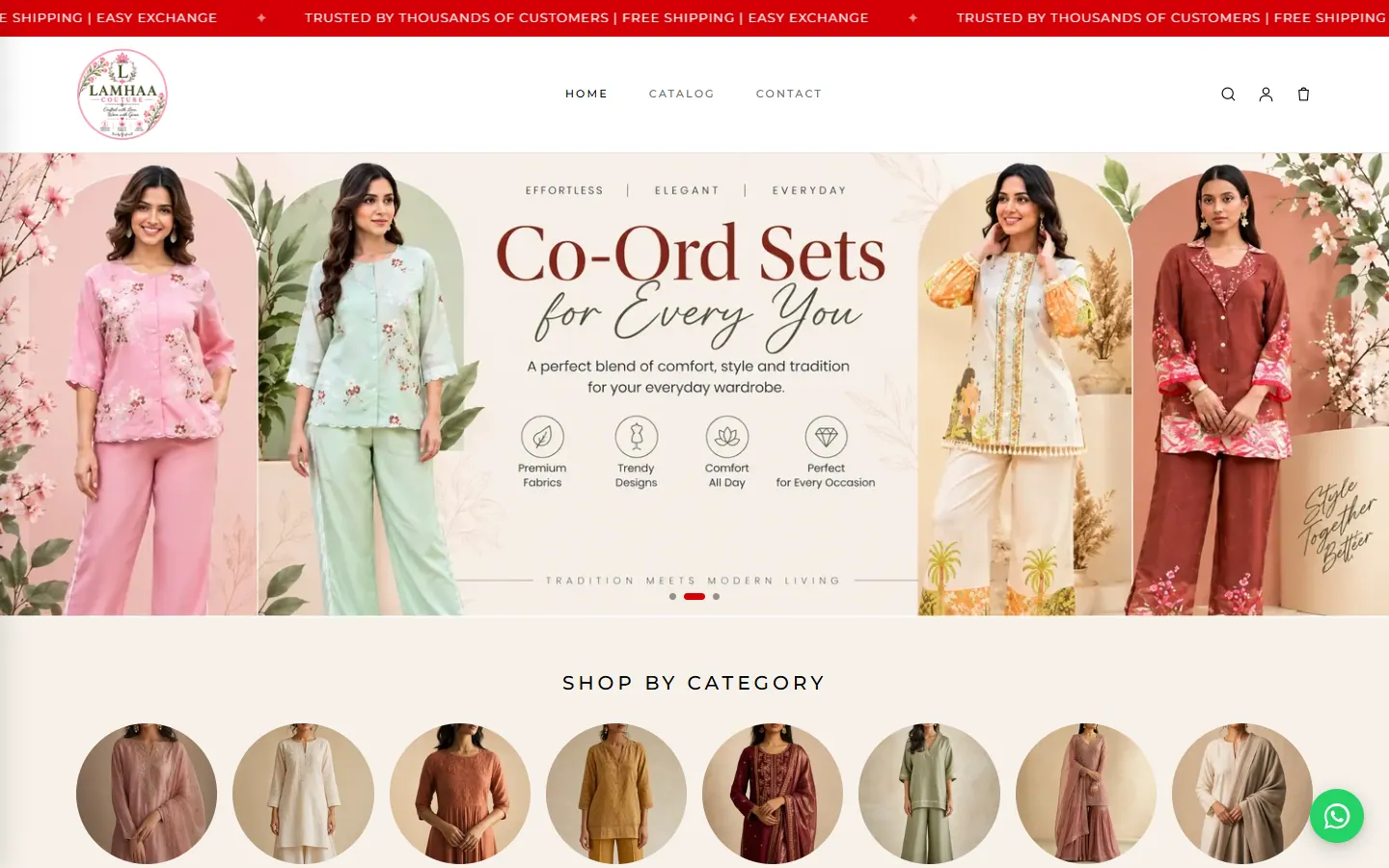
E-commerceEthnic fashion store · Shopify
Shopify store for a women’s ethnic wear label selling embroidered suit sets.
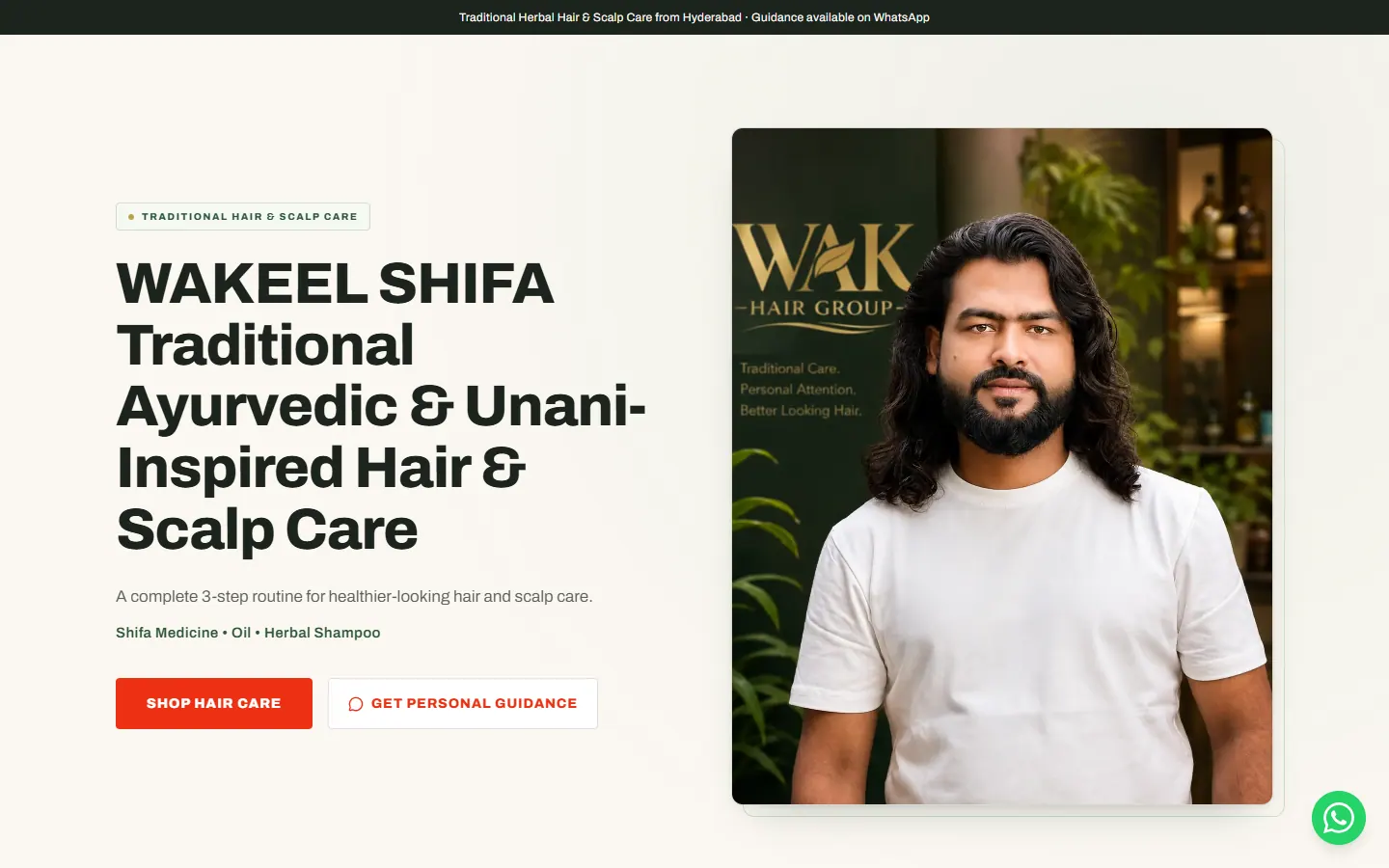
E-commerceHair care brand · Custom Website
Website and online store for a herbal hair care brand from Hyderabad.
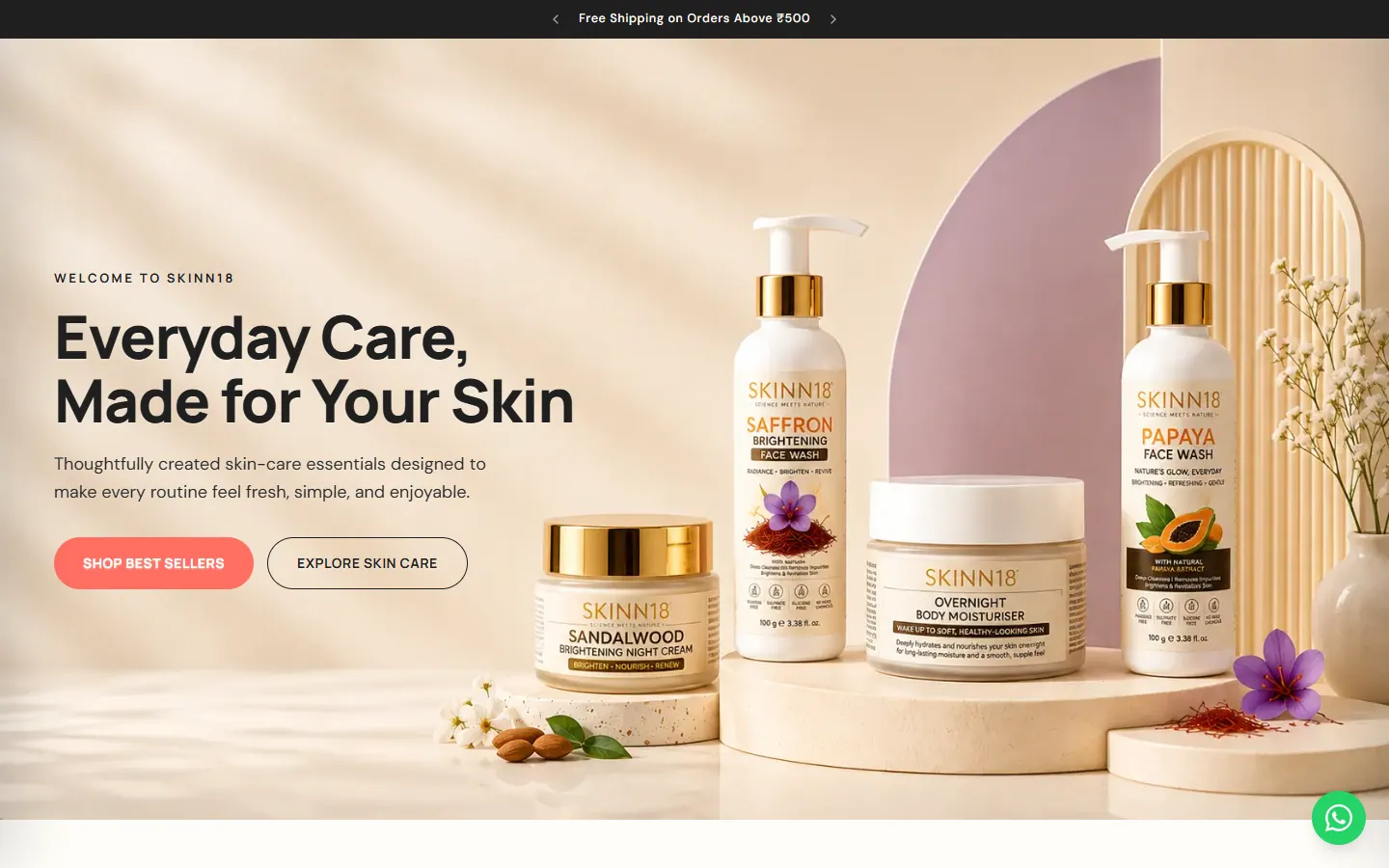
E-commerceSkincare brand · Custom Website
Skincare brand website with an online shop for targeted skincare products.
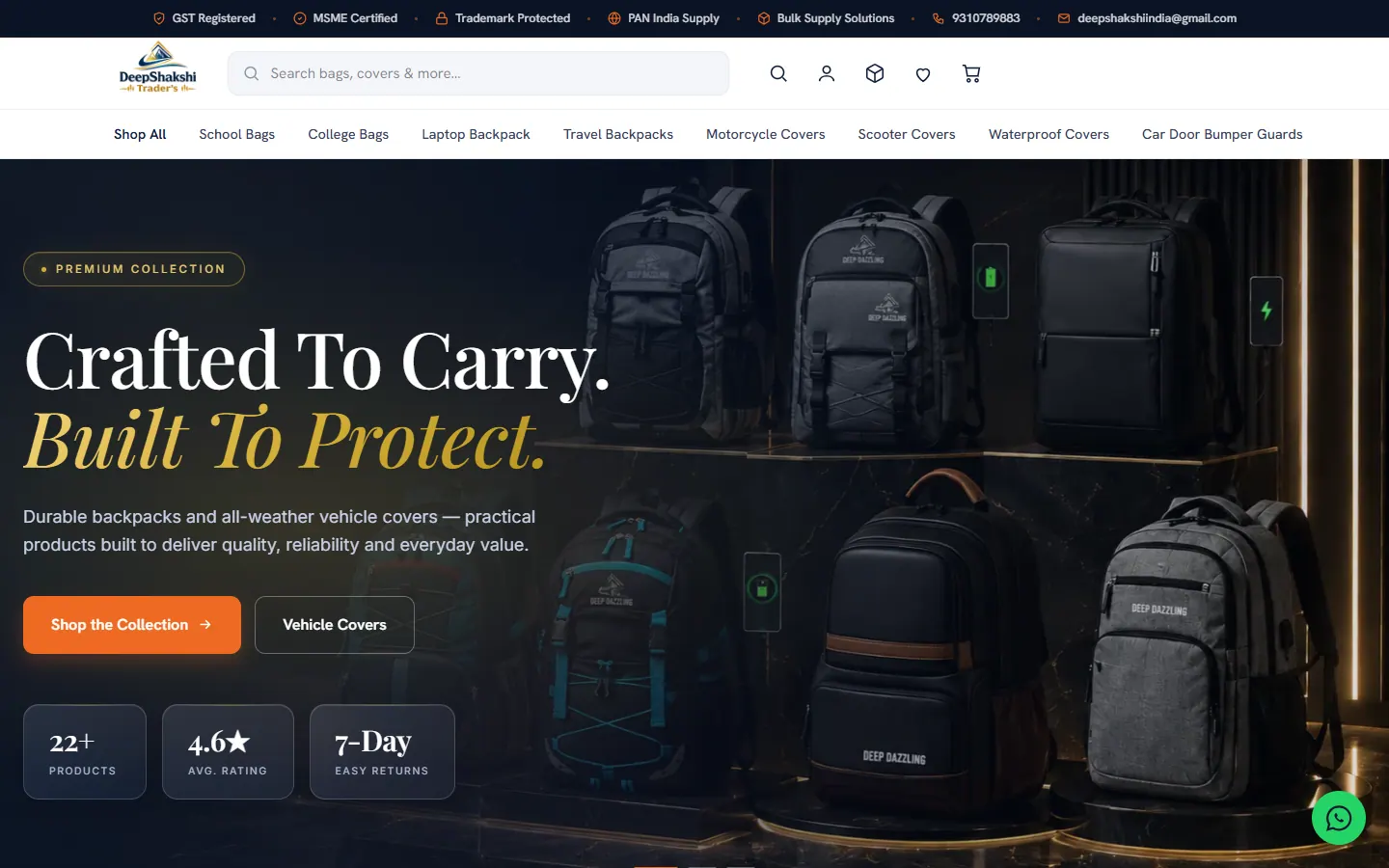
E-commerceOnline store · Custom Website
Online store for backpacks, travel bags and vehicle covers.
A clear, five-step process keeps every project focused. Timelines depend on project complexity, content readiness and scope — we confirm them in your quote.
We understand your business, goals, audience and requirements.
We define the site structure, content, features and scope.
We establish the visual direction and user experience.
We build the website and the agreed integrations.
We test, resolve issues and prepare the site for go-live.
Common questions from businesses in this industry.
Shopify suits most brands that want a reliable store quickly. WooCommerce suits content-led businesses already on WordPress. Custom suits unusual catalogues or workflows. We’ll recommend one based on your products and plans.
Yes. We can set up or import your products, variants and collections as part of the agreed scope, using the product data you provide.
Yes, typically through platform apps or integrations. Some of these tools have their own subscription costs.
Share your product range, current platform and goals. We’ll recommend Shopify, WooCommerce or custom — and explain why.